
Pre-Emergent Herbicide Timing — Miss This Window, Lose the Season
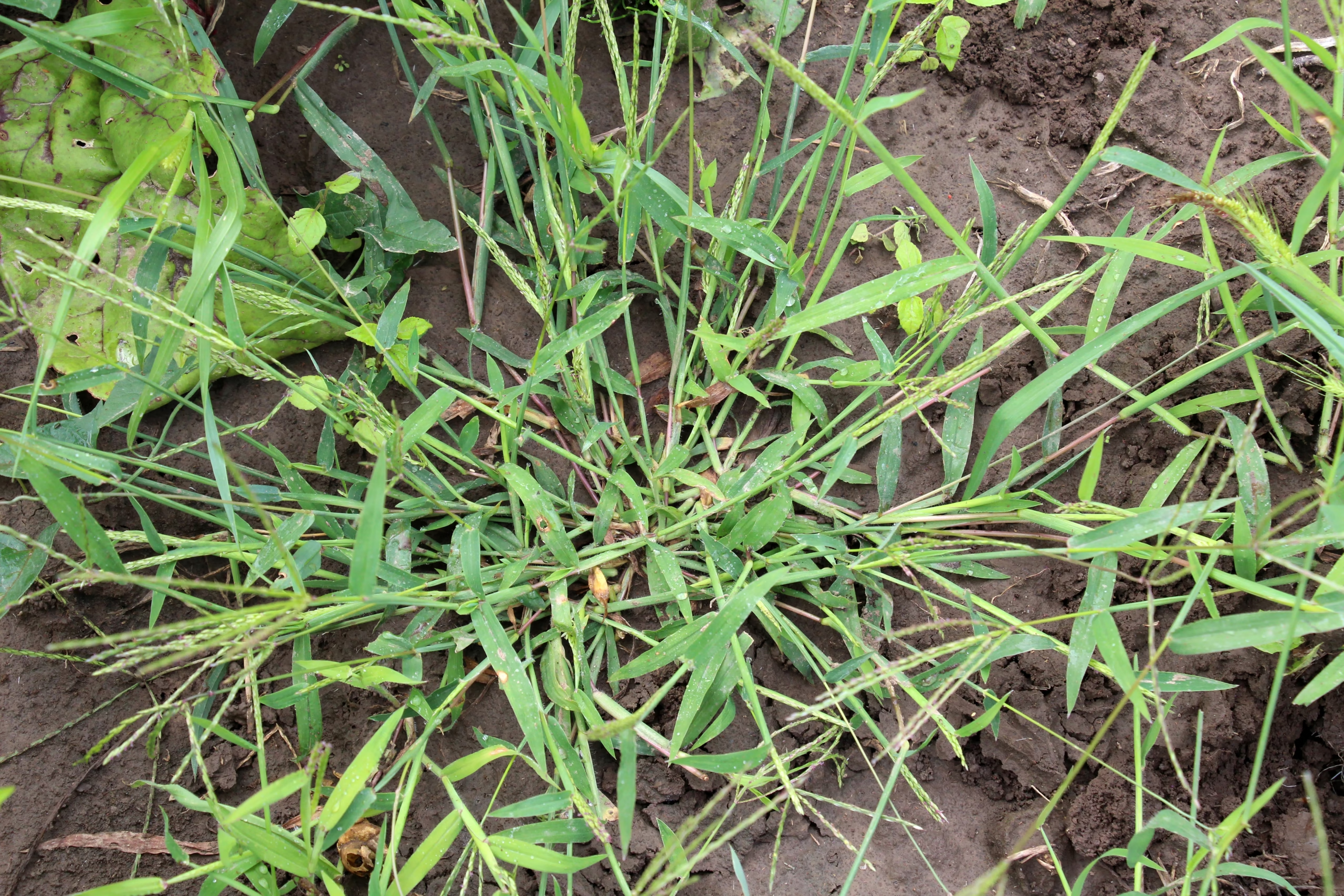
Crabgrass is the villain. It’s the reason a lawn that looked sharp in May is patchy and tired by July. The fix isn’t killing it once it’s up — it’s stopping the seed from ever germinating in the first place. That’s what pre-emergent herbicide does, and the single most important thing about it is timing.
The soil temperature rule
Crabgrass seed germinates when soil temperature hits 55°F sustained for 2 to 3 days. That’s the trigger. According to Virginia Cooperative Extension, once germination starts, it continues through spring and summer — so you only get one shot at stopping it.
Your pre-emergent has to be in the soil before germination starts, not when it’s already underway. The rule of thumb: apply when soil is in the 50–55°F range and trending upward. That gives you a buffer before the 55°F germination threshold kicks in.
The forsythia trick
Most homeowners don’t own a soil thermometer, and that’s fine — nature gives you a visual cue. Virginia Coop Extension cites the forsythia bloom drop as the classic timing indicator. When forsythia bushes start shedding their yellow blooms, your window for pre-emergent is closing.
It’s not perfect — the extension itself notes “Mother Nature is not perfect” — but it’s close enough that if you see forsythia losing petals and you haven’t applied yet, you’re running late.
When this happens in Fredericksburg
Central Virginia (USDA zone 7a) typically hits that 50–55°F soil-temp window between late February and mid-March. Forsythia blooms here usually peak around the first week of March and start dropping by mid-March. Translation: the pre-emergent application window for most FXBG lawns is February 20 through March 20, with the safe middle being early March.
Better early than late
Extension guidance is explicit on this: “It is better to be extra early rather than late when applying preemergence herbicides for crabgrass control.” See the full best-management-practices guide from VCE.
Pre-emergents have soil activity for 6 to 8 weeks, so an early-February application still protects you through the peak germination window. A late-March application might miss half the seed bank entirely.
What not to do
- Don’t apply to a lawn you’re overseeding. Pre-emergent doesn’t know the difference between crabgrass seed and your new tall fescue seed — it kills both.
- Don’t apply to wet grass. Water it in after application with a quarter-inch of irrigation or let the next rain do it.
- Don’t assume last year’s application carries over. It doesn’t. This is an annual task.
The honest math on cost
A homeowner can apply pre-emergent for $40–$60 in product plus an afternoon. Our Weed Control service runs the same amount (often less for small yards because it’s bundled with the first fertilization). The difference is we apply it on the right day at the right temperature, and we stand behind it — if crabgrass shows up anyway, we come back.
If you’ve already got a Weekly Mowing plan with us, pre-emergent is automatic — it’s built into our first fertilization visit and timed off soil temperature data from the Fredericksburg NWS station, not a guess.
The short version
- Soil hits 55°F for 2-3 days → crabgrass germinates.
- Apply pre-emergent before that, while soil is still 50–55°F.
- In Fredericksburg, that’s roughly late February through mid-March.
- When forsythia drops its blooms, your window is closing.
- Better a week early than a day late.
Sources
Related services
Ready for a Better Property?
Real prices in a few minutes — no sales calls, no obligation.