
Mid-Winter Pruning — Shrubs and Fruit Trees Ready for a Shape-Up
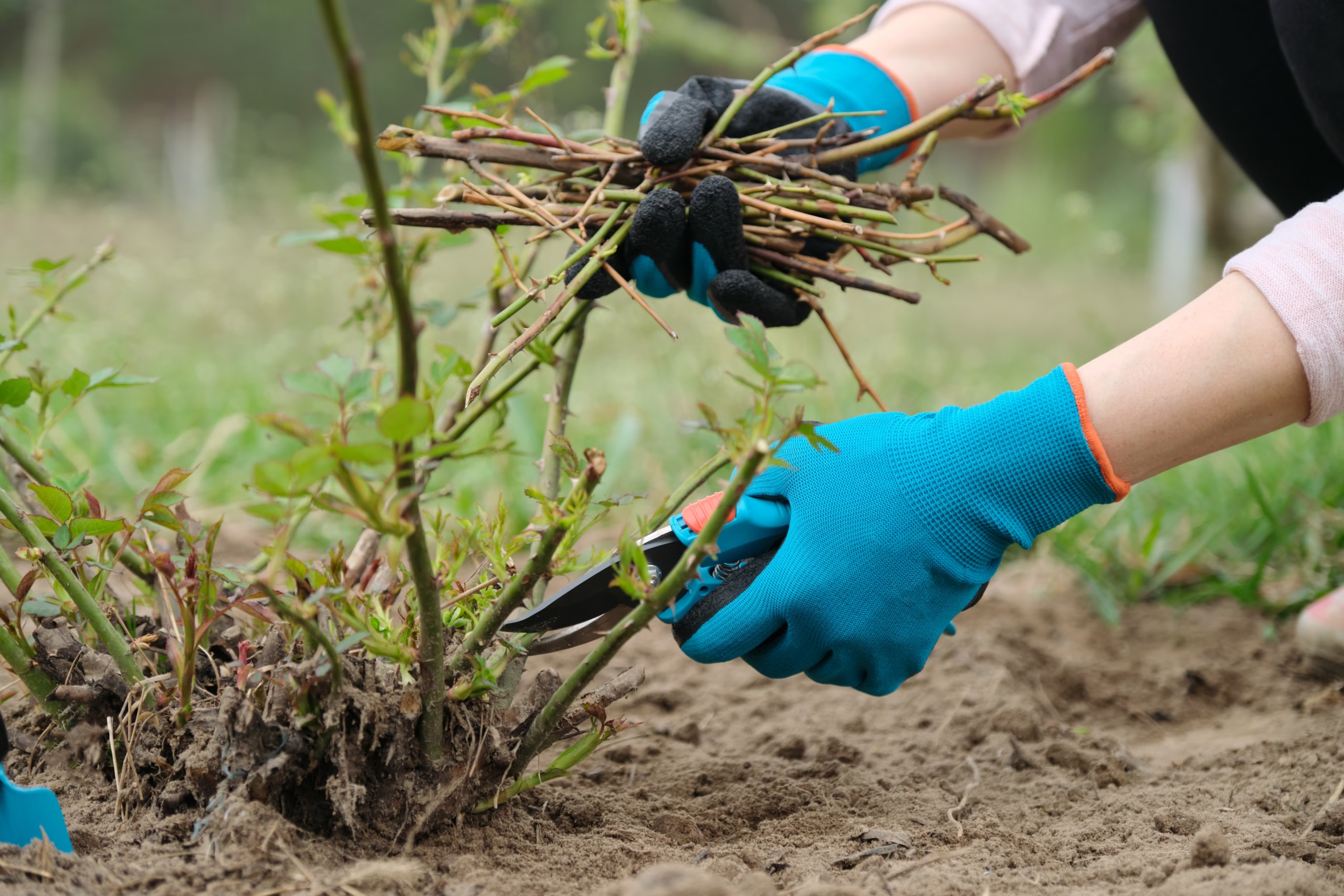
February is the last great month for dormant pruning in central Virginia. Buds start swelling in March, and by the time you see green tips the window is closed. What you prune now heals fast, stays clean of disease, and sets the shape for the year. What you prune wrong never recovers by summer.
Prune now
Per VCE’s Gardener Handbook, February is ideal for:
- Most deciduous fruit trees. Apple, pear, peach, cherry, plum — especially mature ones. (Young non-bearing stone fruits should wait until after Feb 1 per VCE’s fruit tree pub.)
- Summer-flowering shrubs. Crape myrtle, rose of Sharon, butterfly bush, smooth hydrangea. These bloom on current-year growth, so a February haircut sets you up for more flowers, not fewer.
- Grapes, raspberries, blackberries. Cut back canes before sap starts moving.
- Shade trees (oak, maple, birch, elm). Cleanest cuts you’ll get all year.
DO NOT prune now
Spring-flowering ornamentals — their buds formed last summer and are sitting on this year’s stems. Cut them in February and you throw away this year’s bloom. The list:
- Azalea, rhododendron
- Forsythia (that’s the yellow hedge that tells you pre-emergent timing)
- Lilac
- Dogwood, redbud
- Bigleaf hydrangea (the blue/pink kind — different from smooth hydrangea)
- Camellia
Those all get cut right after they finish blooming, when they set next year’s buds.
The 1/3 rule
VCE is firm on this: never remove more than one-third of a plant’s live canopy in a single season. You can thin, shape, and rejuvenate within that limit. Blow past it and you stress the plant into next year.
How we approach a pruning visit
- Dead, damaged, diseased — always the first cuts, and usually the only ones that are non-negotiable.
- Crossing and rubbing branches — they wear the bark off each other and invite disease.
- Suckers and water sprouts — the vertical shoots off roots or trunks.
- Shape and thin — and only after the first three are done.
Tool hygiene matters
Pruning tools move disease between plants if they’re not clean. We sterilize with 70% isopropyl between trees. Doing a couple shrubs in your own yard? A quick wipe with alcohol between each one costs nothing and protects the plant you just cut.
Pricing runs $10 for small shrubs and trees, $25 for medium, capped at $100 per tree. Get a real number on the quote widget.
Sources
Related services
Ready for a Better Property?
Real prices in a few minutes — no sales calls, no obligation.