
Winter Is the Best Time to Trim Dormant Trees
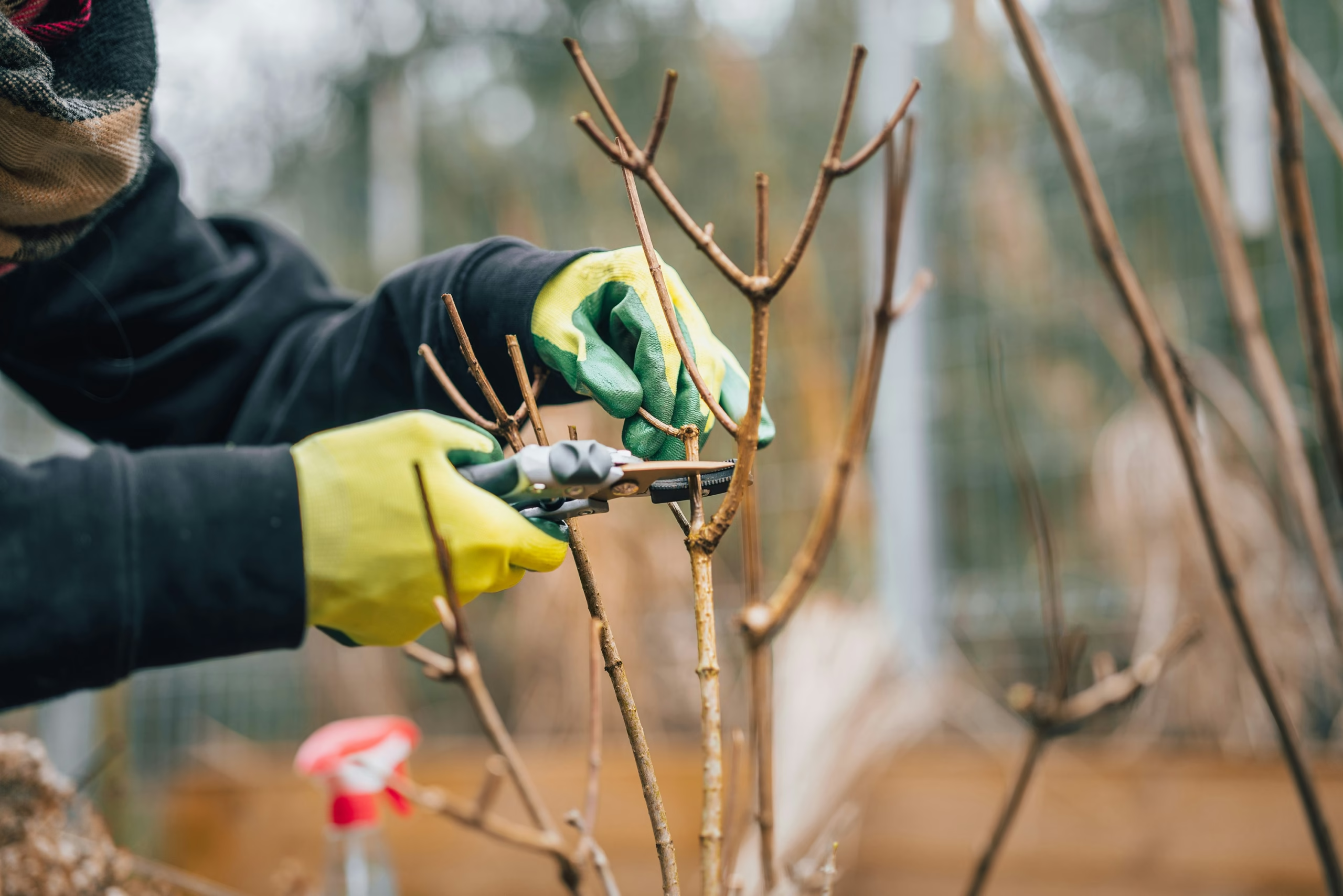
Photo by Jakub Żerdzicki on Unsplash
Most homeowners think of tree trimming as a summer job — it’s warm, you’re outside anyway, and you can see what you’re cutting. The arborists disagree. According to Virginia Cooperative Extension’s Gardener Handbook, most pruning is best done during the dormant season, just before active growth begins in spring. That means January through mid-February in Fredericksburg.
Why dormant pruning wins
Three reasons extension horticulturists line up on this:
- Structure is visible. With leaves gone, you can see the whole framework of the tree — crossing branches, suckers, bad angles. In summer, that’s all hidden behind a canopy.
- Wounds heal quickly. Cuts made in late winter close rapidly once sap starts moving in March, so infection and decay risk drops.
- Pests and disease are dormant too. Most of the insects that exploit open cuts (borers, scale) are inactive. Fungal spores are mostly grounded.
Young fruit trees: wait until after Feb 1
One caveat from VCE’s Tree Fruit in the Home Garden publication: young, non-bearing apple trees and stone fruits (peach, cherry, plum) should wait until after February 1 to minimize the chance of winter injury to pruning wounds. Mature fruit trees are fine to prune starting in January.
What we do on a dormant-pruning visit
- Remove dead, damaged, or diseased wood — always the first pass
- Cut out crossing and rubbing branches
- Raise the canopy where it’s blocking paths or decks (within the 1/3-of-live-canopy rule)
- Thin interior branches for light penetration and air flow — especially important on fruit trees
- Haul off every twig and clean up hard surfaces before we leave
What we don’t touch in January
Spring-flowering ornamentals — azaleas, forsythia, dogwood, redbud, lilac. Those set their flower buds the previous summer, so a January haircut throws away this spring’s bloom. We prune those right after they flower.
Same rule for spring-flowering shrubs on the VCE pruning calendar — if it blooms before mid-June, wait until after it flowers.
Pricing
Tree trimming runs $10 for small shrubs and trees, $25 for medium, with a $100 cap per tree for the big stuff. Mature tree work (40+ feet, chainsaw-on-rope) we contract out to a certified arborist and handle the coordination for you.
Grab an instant quote if you’ve got a specific tree in mind — the widget asks about tree count and size and gives you a real number.
Sources
Related services
Ready for a Better Property?
Real prices in a few minutes — no sales calls, no obligation.